What Is the Difference Between a Channel Letter Sign and a Box Sign?
News Details
Choosing the right exterior sign is one of the most critical decisions for any commercial enterprise or retail brand. However, navigating signage terminology can sometimes feel overwhelming. Business owners and facility managers frequently ask: What is the fundamental difference between a channel letter sign and a box sign?
While both options display brand names and logos clearly, they differ significantly in construction, illumination, aesthetic appeal, and total cost of ownership. Understanding these differences allows commercial buyers to make informed investments that enhance brand visibility and drive foot traffic.
In this comprehensive guide,River Stone Signage breaks down how these two classic storefront signage styles compare, exploring design variations ranging from front-lit channel letters to commercial LED light box signs.
 |
 |
Understanding the Basics: Channel Letter Signsvs CommercialLED Light Box Signs
To choose the best sign for your building facade, you must first understand how each sign type is built and structured.
What Is a Channel Letter Sign?
A channel letter sign is a three-dimensional graphic sign element. Each letter, number, or symbol is fabricated individually as a separate 3D object.
Typically, channel letters are crafted with aluminum backing and sides (known as "returns") and fitted with acrylic faces. Internal LED modules illuminate each letter independently, producing a distinct 3D outline that stands out against the building surface. Because each character is separate, channel letter signage provides a sleek, modern appearance favored by high-end retail stores, corporate headquarters, and shopping centers.
What Is a Box Sign (Cabinet Sign)?
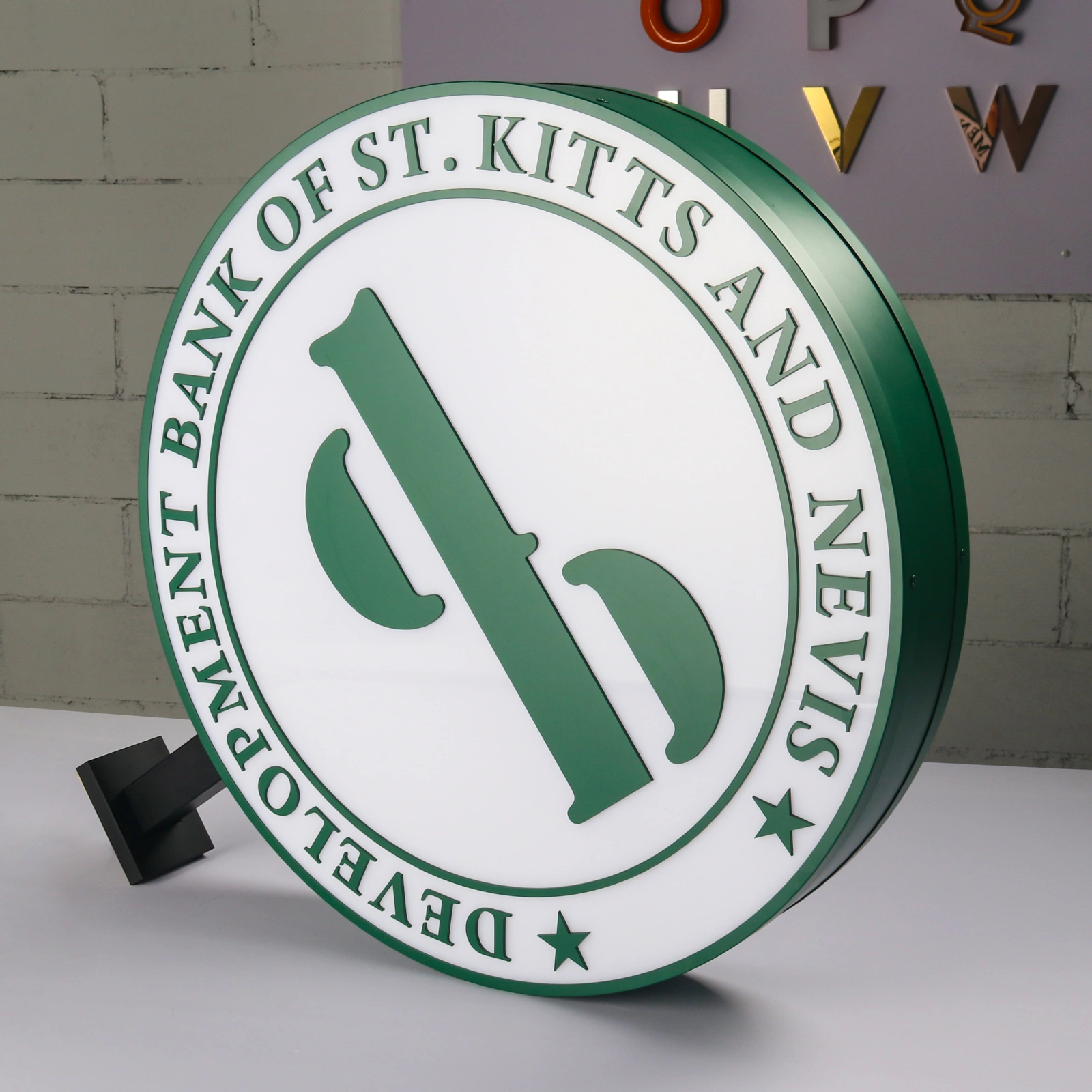
In contrast, a box sign—often called a cabinet sign—is a single continuous frame that holds all text and graphics inside one enclosed box.
The outer framework is usually built from durable extruded aluminum, while the front face consists of translucent acrylic or flexible vinyl printing. The interior of the box contains LED light bars or modules that evenly illuminate the entire faceplate from within. Commercial LED light box signs are widely used by plazas, industrial sites, service centers, and budget-conscious retail brands because they pack full-color logo graphics, contact numbers, and taglines into a single compact housing.
| Feature | Channel Letter Signs | Commercial LED Light Box Signs |
| Structure | Individual 3D letters and logos | Single enclosed cabinet housing |
| Customization | High (custom fonts, shapes, and depth) | Moderate (rectangular, oval, or basic custom contours) |
| Lighting Styles | Front-lit, halo-lit, open-face, or dual-lit | Full face panel backlighting |
| Visual Depth | Strong architectural 3D presence | Flat graphic face with 3D enclosure frame |
| Maintenance | Module replacement per letter | Single cabinet access panel |
Exploring Channel Letter Variations: From Front Lit Channel Letters to Open Face Channel Letters
Channel letter signs offer remarkable design flexibility. Depending on where your store is located and how you want your brand to appear at night, you can select from several distinct lighting styles.
1. Front-Lit Channel Letters
Standard front lit channel letters are the most common sign type seen in modern shopping centers. In this design, the back and metal sides of each letter are solid aluminum, while the front face is clear or colored acrylic.
When the internal LEDs light up, illumination passes directly through the front acrylic face. Consequently, front-lit channel letters produce bright, clear, and highly visible brand names that can be read easily from great distances, even in dark conditions or bad weather.
2. Open Face Channel Letters
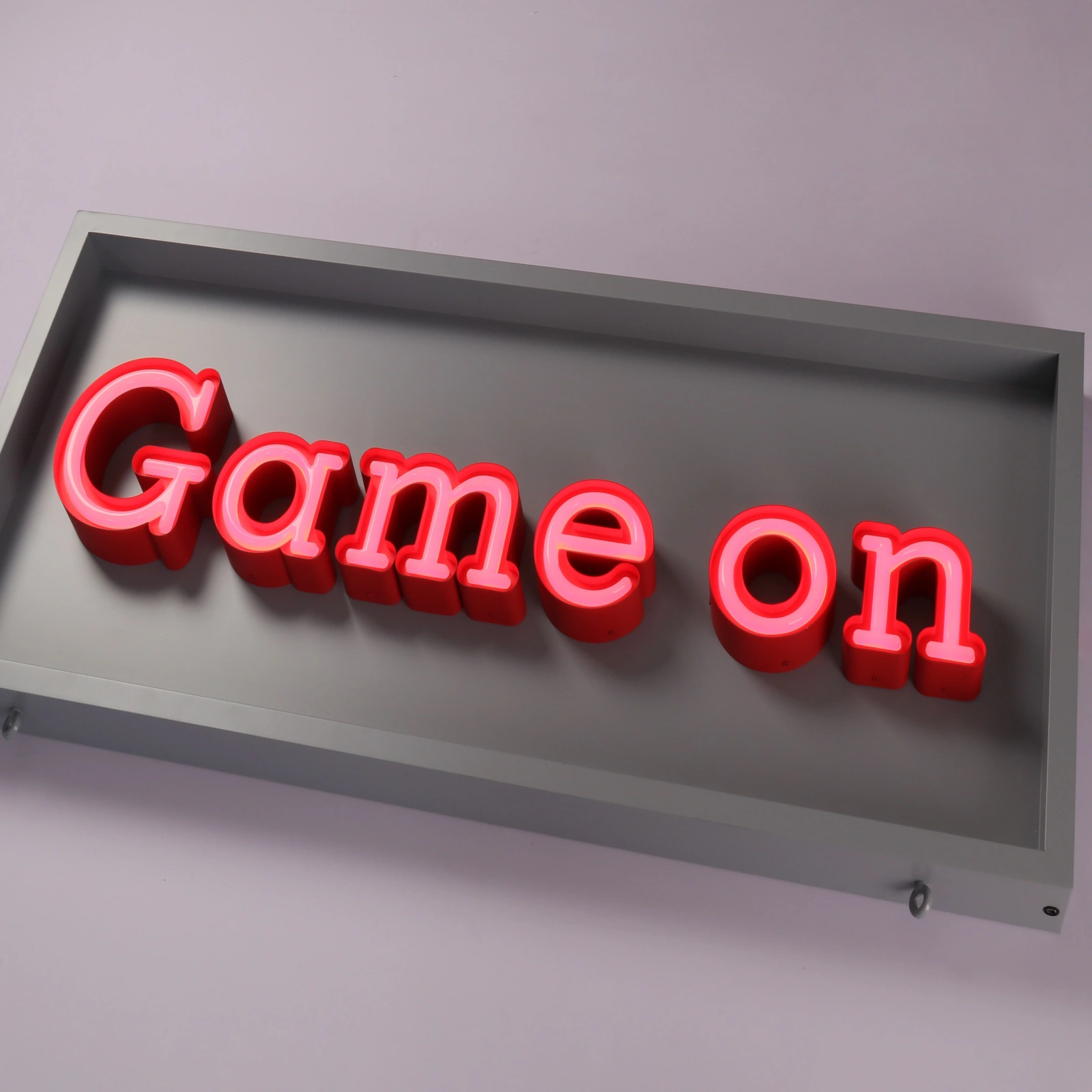
Unlike enclosed channel letters, open face channel letters do not feature an opaque or colored acrylic face panel. Instead, the face is completely open or covered with a clear acrylic sheet, exposing the light source inside.
Historically, open-face letters used neon tubing to produce a classic vintage glow. Modern iterations crafted by River Stone Signage utilize high-efficiency exposed LED filament modules. Therefore, open face channel letters are perfect for restaurants, bars, nightlife venues, and industrial-style retail spaces seeking an edgy, retro aesthetic.
Dual-Illumination Power: Front and Back Lit Channel Letters Explained
When a business requires maximum visual impact, standard single-direction lighting might not be enough. This is where dual-illumination channel letters excel.
Combining Front Glow and Halo Halo-Lit Effects
By combining translucent acrylic front faces with open or clear backing elevated off the wall with spacers, sign builders create front and back lit channel letters.
As a result, light shines simultaneously forward through the face and backward onto the wall surface. The backward-directed light creates a soft, elegant "halo" glow surrounding each letter, while the forward light ensures sharp readability.
Why Choose Front Back Lit Channel Letters?
Choosing front back lit channel letters offers several clear benefits for premium retail and corporate properties:
-
Superior Contrast: The crisp front light makes text legible at a distance, while the ambient halo glow adds depth and luxury.
-
Architectural Integration: The halo light highlights brick, stone, or metallic wall textures behind the sign.
-
Brand Prestige: High-end boutique stores, auto dealerships, and hotel chains frequently specify front and back lit channel letters to reflect quality and attention to detail.
Comparing Key Features: Structure, Cost, Visibility, and Customization
To select between a channel letter system and a light box sign, evaluate these four key criteria:
1. Visual Aesthetics and Brand Image
If your primary goal is a premium, modern facade, channel letters are usually the better choice. Because each letter is mounted separately, channel letters feel integrated into the building's architecture. On the other hand, commercial LED light box signs present a bolder, block-style look that works exceptionally well for multi-tenant plazas or simple corporate logos.
2. Fabrication and Installation Costs
Box signs are generally more cost-effective to manufacture and install. Because all components reside inside a single cabinet, installation requires fewer wall penetrations and simpler wiring setups. Conversely, custom channel letter signs require individual letter forming, precise laser cutting, complex wiring, and meticulous mounting, resulting in a higher initial investment.
3. Local Zoning and Building Codes
Many property landlords and municipal zoning boards enforce strict sign ordinances. In high-end commercial districts, flat box signs are often restricted in favor of individual dimensional letters. Therefore, always verify local sign codes before finalizing your design choice.
4. Maintenance and Energy Efficiency
Both sign types now leverage modern LED technology, which dramatically reduces energy consumption compared to old fluorescent tubes or neon lights. However, maintaining commercial LED light box signs is often simpler because technicians only need to open one access door to service the internal components.
How River Stone Premium Custom Signage Enhances Your Brand Identity
At River Stone Signage, we specialize in engineering, fabricating, and delivering commercial-grade signage solutions tailored to international business requirements.
Whether you need sleek front-lit channel letters for a nationwide chain or heavy-duty commercial LED light box signs for an industrial park, River Stone premium custom signage delivers unmatched durability, weather protection, and visual performance.


