Custom Signage Manufacturer vs Local Sign Company: How to Choose the Right Source
News Details
There is often a significant price gap between custom signs offered by local sign companies and those from overseas sign manufacturers. Most buyers instinctively assume one side must be cutting corners—but usually, the explanation is simpler: a sign company and a sign manufacturer sell fundamentally different bundles of work. Which option is better depends on your project size, timeline, and who handles installation. In this guide, we will compare the two sourcing models across cost, lead time, shipping, warranty, and vetting, and then outline a practical decision framework.
Sign Manufacturer vs Sign Company: The Core Difference
A sign company is a service-oriented business. It offers end-to-end services including design, permitting, installation, and maintenance. A signage manufacturer, by contrast, is a production-oriented business. It focuses on large-scale fabrication and ships finished products directly to buyers or distributors, leaving on-site services to others. Local sign companies sell convenience and accountability on site; sign manufacturers sell production capability, tooling, and material control. The most common mistake buyers make is comparing a factory price with a full-service quote and assuming the two figures cover the same scope of work.
What a Local Sign Company Provides
Working with a local sign company means you are paying for several things a factory cannot "ship": site surveys and precise measurements, assistance with landlord approvals and municipal sign code compliance, professional installation, and a nearby contact for urgent issues. For a single storefront sign with a tight deadline, these services are often well worth the premium. The trade-off lies in the cost structure: local labor, overhead, and installation are bundled into the price. This is why a sign fabricated and installed locally commonly costs several times more than the same sign purchased as hardware only.
Factory Direct Signs: Where the Savings Come From
The cost advantage of factory direct signs comes from scale and specialization. A manufacturer equipped with CNC laser cutters, automated painting lines, and dedicated LED assembly stations can produce channel letters and dimensional lettering at a fraction of the per-unit labor cost of a small workshop. Factories can also purchase acrylic, stainless steel, and LED modules in bulk, ensuring consistent material grades such as 304 or 316 stainless steel. However, this savings applies only to the product itself. Freight, import duties, and local installation are additional costs on the buyer's side. For one-off, oversized, or rush projects, these extra expenses can erase most of the price advantage.
Comparing Cost, Lead Times and Shipping
| Factor | Local sign company | Factory direct (manufacturer) |
| Unit cost | Higher; includes labor, overhead and service | Lower for the product; freight and duties added |
| Lead time | Short for small jobs; useful for urgent deadlines | Production of 3–7 days is typical, plus shipping time |
| Shipping | Local delivery, minimal transit risk | Express, air or sea freight; export packaging matters |
| Installation | Usually included | Arranged by you with a local contractor |
| After-sales | On-site service calls | Remote diagnosis and replacement parts shipped |
Two timing notes are important to keep expectations realistic. First, the lead time for signage from a factory includes both production and transit. Many manufacturers can complete fabrication within a week, but international shipping adds several days by air or several weeks by sea. Plan to order well in advance of your installation date. Second, importing signs from China or other manufacturing hubs works best when artwork and specifications are finalized before production begins, because repeated on-site adjustments are impractical across borders. Compact, well-specified products such as channel letters and metal letter signs travel well; giant structures that require steelwork on site usually do not.
Custom Sign Installation: Who Handles What
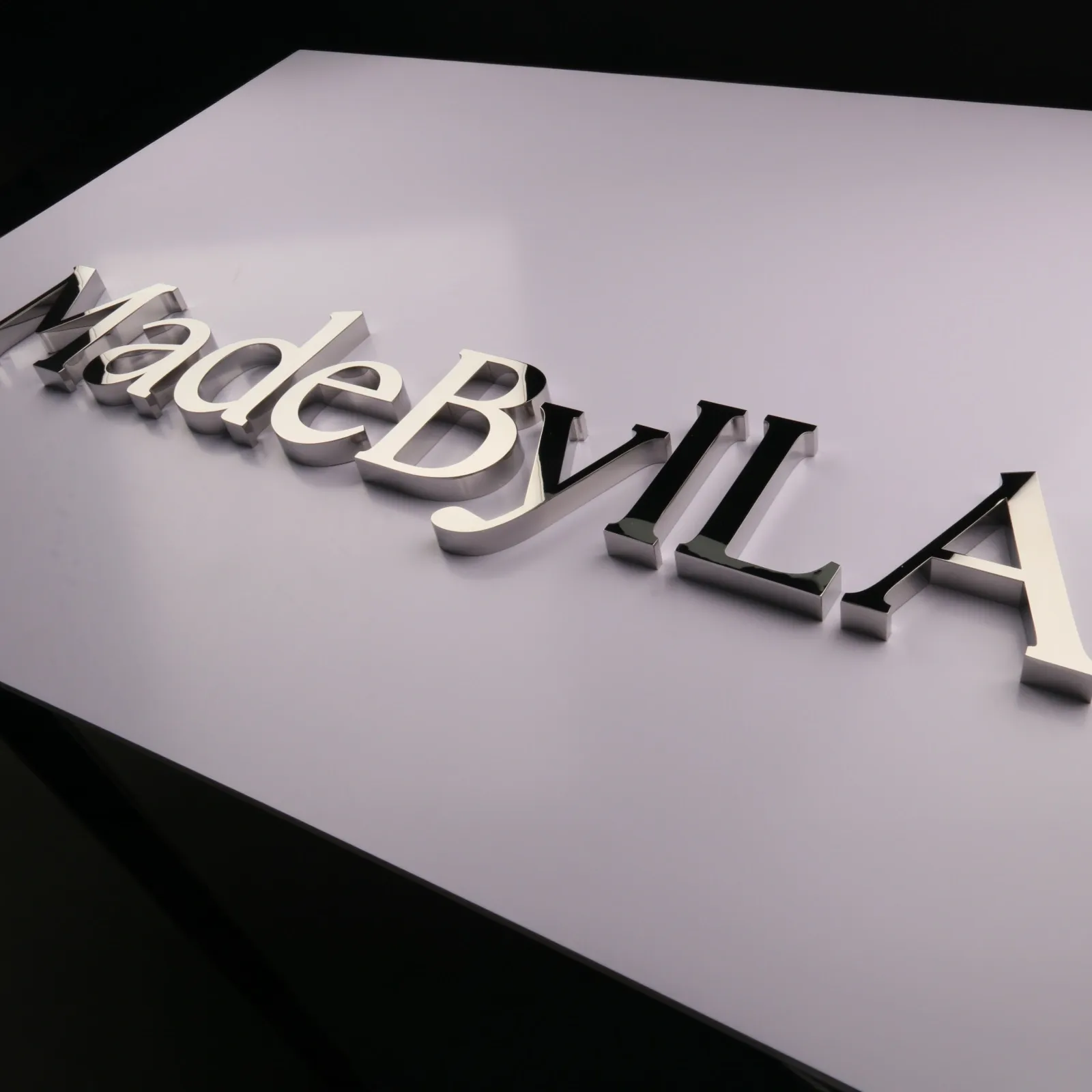
The most common point of failure in factory-direct projects is not the sign itself, but the handoff. A manufacturer can provide mounting drawings, electrical requirements, and technical support, but someone still has to measure the wall, run power, and lift the letters into place. Before ordering direct, confirm who will perform the custom sign installation and whether your building requires local certification for illuminated signs. Many buyers use a hybrid model: the manufacturer produces the signs, and a local sign company is hired separately for surveying and installation. This often costs less than a fully local build.
Warranty and After-Sales Support
Warranty terms reveal how each model approaches risk. Local service is immediate but often limited in duration: labor warranties of only a few months are common. A typical sign manufacturer warranty covers manufacturing defects and power supplies for five years, with claims handled by shipping replacement modules rather than dispatching a technician. This approach works well for LED and power supply failures—the most common service issues on illuminated signs. Ask both sides exactly what is covered, for how long, and who pays for labor and freight on warranty replacements.
How to Vet a Sign Manufacturer
If you decide to source directly from a factory, vetting matters more than price.
- Confirm they fabricate, not trade. Ask for production photos or a live video walkthrough of the workshop; intermediaries cause most quality and delay problems.
- Request material and component specifications. Steel grade, acrylic brand, LED module and power supply brands should be stated in writing.
- Check engineering capability. CNC cutting precision, mounting design, waterproofing standards such as IP65 for outdoor LEDs, and export packaging all affect how the sign performs after shipping.
- Order a sample or pilot unit before committing to a multi-location rollout, and approve the artwork proof in writing.
- Clarify response time. A manufacturer that reviews artwork and returns quotes within 24 hours is far easier to work with across time zones.
Which Should You Choose?
Choose a local sign company when the project is a one-off, oversized, urgent, or requires site surveys, permits, and hands-on installation. Go factory direct when the design is finalized, the components are shippable, and you have—or can hire—a local installer. For multi-location rollouts and repeat orders, the factory-direct route usually wins on cost and consistency, especially when the manufacturer offers engineering review, strong export packaging, and a clear warranty. River Stone is a custom signage manufacturer serving buyers in more than 40 countries from its facilities in Chengdu and Shenzhen. We review artwork and return quotes within 24 hours, with typical production lead times of three to seven days and a five-year warranty covering manufacturing defects. Send us your drawings for a manufacturability review before you commit—whichever route you choose.


